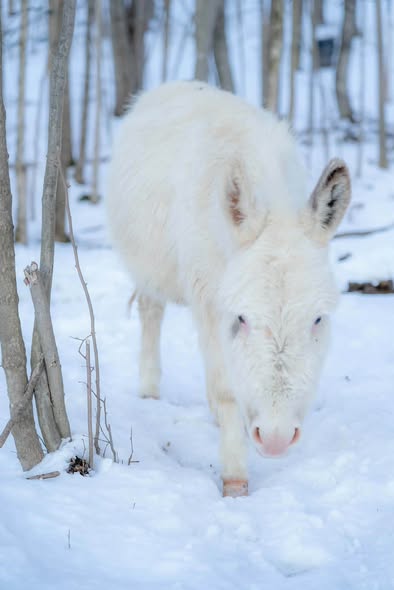

The 3 F’s in Action: How Our Herd and Humans Thrive Together
 Rachael
What do you think of when you hear “The 3 F’s in Action?” What comes to your mind? They might not be what you think–At Operation Horses Heal, the well-being of our horses and donkeys is not just an afterthought — it’s a cornerstone of everything we do. We believe that the care we give our herd directly shapes the experiences they can share with Veterans, active service members, and their families. That’s why we embrace the 3 F’s of horse care — Friends, Forage, and Freedom — as both a daily commitment and a guiding principle in our sessions.
The 3 F’s: Friends – Companionship in the Herd and the Human Connection
Horses and donkeys are deeply social animals. They thrive in the company of others who speak their same “language.” In our pastures, herd members live together in compatible groups, forming relationships that help them feel safe, understood, and secure.

In sessions:
When participants spend time with the herd, they can witness — and often join — this web of social connection. A Veteran may notice two horses quietly standing together, mirroring the comfort of a trusted buddy nearby. Or during a group activity, a donkey might choose to stand between two participants, bridging the gap and encouraging gentle conversation. The “Friends” element isn’t just about equines relating to equines — it’s about how the herd models healthy companionship for us, too.
The 3 F’s: Forage – Nourishment for Body and Mind
In nature, horses and donkeys graze for the better part of the day. We honor this instinct by ensuring our herd has continuous access to forage — fresh grass, quality hay, and safe grazing areas. This supports not only their physical health but also their mental well-being, giving them the comfort of a natural eating rhythm.
In sessions:
Forage moments often become quiet, grounding experiences for participants. A service member might choose to sit in the grass while a horse grazes nearby, sharing space in peaceful silence. The steady sound of chewing, the rhythm of grazing, and the unhurried pace can slow our own thoughts, creating a calm that’s rare in everyday life. These moments remind us that nourishment isn’t only about food — it’s about giving ourselves what we truly need to feel whole.
The 3 F’s: Freedom – Space to Move, Choices to Make
Our herd has the space to roam, roll, run, and rest as they wish. Freedom means they can express natural behaviors without unnecessary restriction — whether that’s exploring a new patch of pasture or simply choosing where to stand in the sun.
In sessions:
Freedom shows up in how the herd interacts with participants. A horse might walk away from a person who’s feeling tense, then later approach once that person’s body language softens. A donkey might choose to follow someone quietly across the paddock, offering a wordless reminder that connection is most meaningful when it’s freely given. We believe these choices — theirs and ours — are what make the experience authentic.

Why the 3 F’s Matter for Our Mission
By honoring Friends, Forage, and Freedom in the daily lives of our horses and donkeys, we ensure they are emotionally and physically ready to engage in meaningful, rejuvenating moments with our participants. Veterans and their families often tell us that these sessions feel different from anything else they’ve experienced — and much of that difference comes from the way our herd lives.
When we care for them in ways that meet their deepest needs, they are free to offer us their truest selves. And in that shared space of trust, respect, and choice, remarkable things can happen — for both the herd and the humans who come to spend time with them.
Would you like to refer a Veteran, active military member or guard member, or their families to our services? You can refer them here. Want to know more about what we offer? Visit our website for more details.
References
BMC Psychiatry. (2024). Are equine-assisted services beneficial for military veterans with post-traumatic stress disorder? A systematic review and meta-analysis. BMC Psychiatry, 24, 5984. https://doi.org/10.1186/s12888-024-05984-w
Farm Animal Welfare Council. (1979). Five Freedoms: Animal welfare standards. UK Government Advisory Committee reports.
Mad Barn. (n.d.). Equine welfare: Understanding your horse’s needs. https://madbarn.ca/equine-welfare/
Marchand, W. R., Andersen, S. J., Smith, J. E., Hoopes, K. H., & Carlson, J. K. (2021). Equine-assisted activities and therapies for veterans with posttraumatic stress disorder: Current state, challenges, and future directions. Chronic Stress, 5, 2470547021991556. https://doi.org/10.1177/2470547021991556
Michigan State University Extension. (n.d.). An animal welfare history lesson on the Five Freedoms. https://www.canr.msu.edu/news/an_animal_welfare_history_lesson_on_the_five_freedoms
RSPCA Australia. (n.d.). What are the Five Freedoms of animal welfare? https://kb.rspca.org.au/knowledge-base/what-are-the-five-freedoms-of-animal-welfare/
Warren-Sohlberg, L., Boggiss, A., Arntzen, C., & Powell, K. (2019). Equine-assisted interventions for veterans with service-related health conditions: A systematic mapping review. Military Medical Research, 6, 28. https://doi.org/10.1186/s40779-019-0217-6