First Annual Women’s Group for Connection and Community
 Rachael
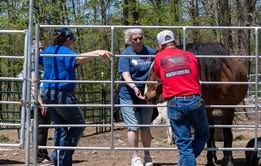
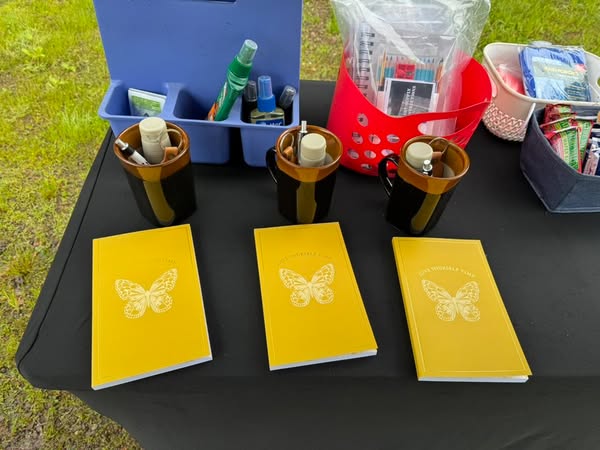
The first annual women’s group was held at Operation Horses Heal on Flag Day, 2025. It was an afternoon of connection, camaraderie, and support exclusively for women Veterans and active-duty service members. This gathering offered a welcoming space to share stories, build friendships, and take part in meaningful activities that honor service and experiences. The ladies in this group had the opportunity to learn more about the services offered here and time to connect with the horses and donkeys (and the
Why women only?
Women Veterans face unique challenges after military service. These challenges often include isolation, loss of identity, and difficulty finding community. Connection is a key part of healing. However, for women Veterans, that connection must come in safe, intentional spaces. Women-only groups are one way to provide this. When combined with equine-assisted learning (EAL), these groups become even more powerful.
Although more women are serving in the military, they are still often overlooked in traditional Veteran programs (Thomas et al., 2021). Many feel invisible, misunderstood, or alone. Some have experienced military sexual trauma (MST), gender discrimination, or other traumas that make mixed-gender spaces feel unsafe (Yano et al., 2012). Women-only groups help change that. They create a space where women can feel seen, heard, and supported by peers with similar experiences (Kehle-Forbes et al., 2017). This kind of connection builds trust and belonging.
Knowing this made it clear that the first annual women’s group would be an important part of our 2025 programming. While our group was small this year, the connection and community could be seen throughout the day. Connection came in many ways; whether it be with each other, the horses and donkeys, or navigating what it looks like to just ‘be,’ there was learning to be had.
Why horses and donkeys?
Adding horses and donkeys to this setting can deepen connection. Equine-assisted learning (EAL) gives women the chance to grow emotionally and socially through non-riding activities. Horses are very sensitive to human emotions and body language. They give honest, immediate feedback without judgment (Lanning & Krenek, 2013). For many women, this helps rebuild trust and confidence in a safe and calming environment.
In fact, research shows that equine-assisted programs can reduce anxiety, improve emotional regulation, and strengthen social skills in Veterans (Johnson et al., 2018). When EAL programs are designed specifically for women, the benefits are even stronger. These spaces offer not only healing but also affirmation of identity and peer support.
In conclusion, women-only groups and equine-assisted learning are a natural fit. Together, they offer Veterans meaningful connection, personal growth, and a renewed sense of belonging.
References
Johnson, R. A., Albright, D. L., Marzolf, J. R., Bibbo, J. L., Yaglom, H. D., Crowder, S. M., & Carlisle, G. K. (2018). Effects of therapeutic horseback riding on post-traumatic stress disorder in military Veterans. Military Medical Research, 5(1), 3. https://doi.org/10.1186/s40779-018-0159-4
Kehle-Forbes, S. M., Meis, L. A., Spoont, M. R., & Polusny, M. A. (2017). Treatment initiation and dropout from prolonged exposure and cognitive processing therapy in a VA outpatient clinic. Psychological Trauma: Theory, Research, Practice, and Policy, 9(4), 396–403. https://doi.org/10.1037/tra0000255
Lanning, B. A., & Krenek, N. (2013). Examining effects of equine-assisted activities to help combat Veterans improve quality of life. Journal of Rehabilitation Research and Development, 50(8), xix–xxviii. https://doi.org/10.1682/JRRD.2012.10.0199
Thomas, K. H., Van Voorhees, E. E., Meyer, E. C., & Kachadourian, L. K. (2021). Women Veterans’ experiences of and preferences for healthcare delivery: A systematic review. Women’s Health Issues, 31(1), 58–68. https://doi.org/10.1016/j.whi.2020.09.003
Yano, E. M., Bastian, L. A., Frayne, S. M., Howell, A., Lipson, L., McGlynn, G., … & Washington, D. L. (2012). Toward a VA women’s health research agenda: Setting evidence-based priorities to improve the health and health care of women Veterans. Journal of General Internal Medicine, 25(1), 4–10. https://doi.org/10.1007/s11606-009-1118-8